
Snap-In Dentures in Rancho Mirage, CA
A removable tooth-replacement option designed to connect to dental implants for greater stability than a traditional denture alone.
Dr. Rod Strober plans the implants, attachments, bite, denture design, and long-term maintenance around your anatomy and restorative goals.
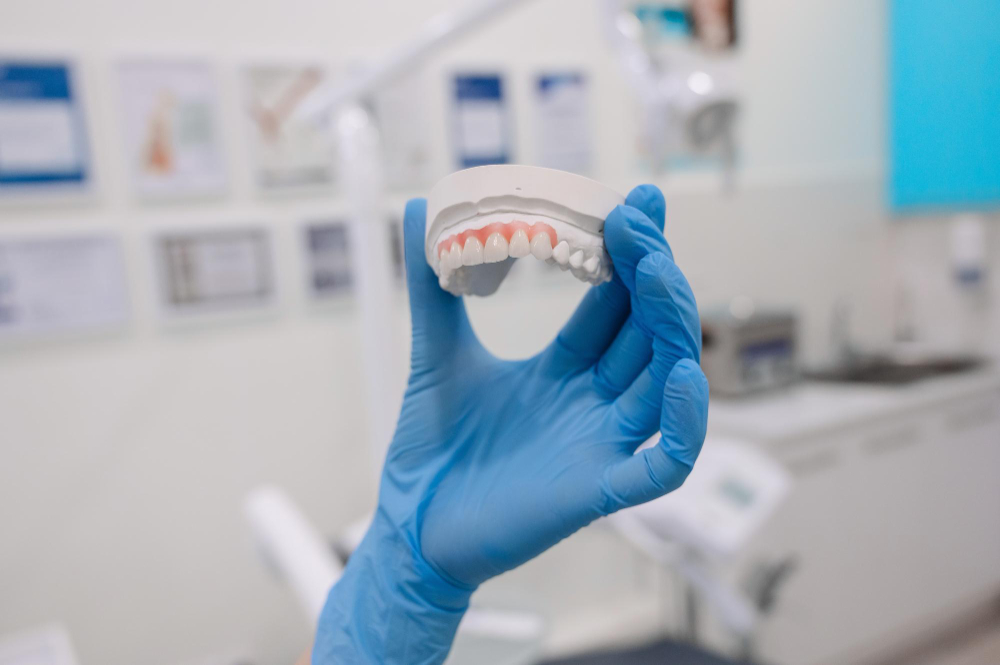
Removable dentures with implant-assisted retention.
Snap-In Dentures are removable overdentures that connect to dental implants placed in the jaw. Small attachment components help retain the denture during daily activities while still allowing it to be removed for cleaning.
Depending on the arch, anatomy, available bone, restorative design, and treatment goals, the denture may be supported by two or more implants. The correct number and position cannot be determined without an examination and three-dimensional planning.
Implant retention can reduce unwanted movement compared with a conventional removable denture, but Snap-In Dentures are not fixed teeth. They still require daily removal, cleaning, professional maintenance, and periodic replacement of worn components.
More stability without giving up removability.
Results depend on the implant foundation, denture design, bite, anatomy, tissue health, maintenance, and individual adaptation.
Reduced denture movement
Implant attachments can help a removable denture resist lifting, shifting, or sliding during speech and chewing.
Improved chewing stability
Many patients find a more stable denture easier to use, although chewing ability and food choices still vary from person to person.
Greater security while speaking
Reduced movement may help patients feel more confident during conversation and other daily activities.
Removable for daily hygiene
The denture can be removed so the prosthesis, gums, tongue, attachments, and implant areas can be cleaned directly.
Implant-assisted retention
The implants provide attachment points that a traditional tissue-supported denture does not have.
A customized restorative design
Tooth position, facial support, bite relationships, attachment location, and available restorative space are planned together.
Removable, implant-retained, or fixed?
Primarily supported by gums, anatomy, fit, and suction.
Connects to implant attachments for added retention.
Secured to implants and removed professionally when needed.
Yes.
Yes.
Not normally removed by the patient.
Usually does not require implant surgery.
Requires dental implant placement.
Requires dental implant placement.
Removed and cleaned daily.
Removed daily so the denture and attachments can be cleaned.
Requires careful cleaning beneath and around the restoration.
Relines, adjustments, repairs, and eventual replacement.
Includes denture care and maintenance of attachment components.
Includes implant, prosthetic, and professional maintenance.
Generally the lowest initial treatment investment.
Includes implants, attachments, surgery, and the removable denture.
Usually the most extensive implant and restorative treatment.
The implants and the denture must be planned as one treatment.
Many people with extensive tooth loss may be considered for an implant-retained overdenture, but candidacy is never automatic.
Healthy or treatable gum tissue
Active periodontal disease, infection, decay, or failing teeth may need treatment before implant care begins.
Adequate implant support
Imaging helps determine whether sufficient bone is available or whether grafting should be considered.
Appropriate surgical health
Medical conditions, medications, healing history, nicotine use, and previous surgery can affect treatment planning.
Ability to maintain the implants
Long-term treatment requires daily cleaning and regular professional evaluation of the denture, attachments, tissues, and implants.
Understanding the removable design
Snap-In Dentures provide implant retention but still rest partly on oral tissues and must be removed for cleaning.
More than the number of implants matters.
The final plan should account for the jaw, muscles, tissues, prosthetic space, smile, bite, and long-term maintenance.
From implant planning to your finished removable denture.
Treatment timing varies according to extractions, bone condition, grafting, implant stability, healing, and the restorative design.
Begin With a ConsultationExamination and imaging
Dr. Strober evaluates your mouth, existing denture, teeth, gums, bone, bite, symptoms, health history, and treatment priorities.
Design the implant foundation
The implant positions are coordinated with the attachment system, denture shape, available space, and final tooth arrangement.
Complete preliminary treatment
Extractions, periodontal care, bone grafting, or another preparatory procedure may be completed when needed.
Insert the dental implants
The planned implants are surgically placed. A temporary or modified removable denture may be used during healing when appropriate.
Allow implant integration
The implants require time to heal with the surrounding bone. Healing duration varies and may take several months.
Create the finished denture
Records are gathered to plan the bite, tooth position, facial support, denture base, attachments, and appearance.
Fit and teach daily use
The denture is evaluated, adjusted, and reviewed with you, including insertion, removal, cleaning, and maintenance.
Daily care protects the denture and the implant foundation.
Follow the individualized instructions provided for your prosthesis, materials, attachments, and oral health.
Seat the denture with your hands
Align the denture as instructed and apply gentle, even hand pressure. Do not force it into place by biting down.
Release it evenly
Use the technique demonstrated by the clinical team so the denture and attachments are not repeatedly twisted or stressed.
Clean the prosthesis every day
Remove loose debris and brush the denture with a suitable denture brush and nonabrasive cleanser according to the instructions provided.
Clean around every attachment
Carefully clean the gums, tongue, attachment components, and areas around the implants using the tools recommended for you.
Store it as directed
When the denture is not being worn, place it in water or an appropriate denture solution if instructed. Avoid hot or boiling water because heat can distort denture materials.
Avoid damaging cleaners
Do not use abrasive household powders, harsh chemicals, or products not approved for your denture and attachment materials.
The attachments are designed to be maintained—not ignored.
Normal wear, tissue changes, bite forces, hygiene, and daily use can change how the denture fits and functions over time.
Surgical and restorative planning in one coordinated process.
Dr. Rod Strober has practiced dentistry since 1993 and provides implant, restorative, cosmetic, and general dental care at Country Club Dentistry.
His approach considers the implant foundation and the finished denture together, including attachment position, bite, facial support, maintenance access, comfort, and long-term restorative needs.
Answers before your implant consultation.
Recommendations depend on your anatomy, oral health, medical history, existing denture, and restorative goals.
01 What are Snap-In Dentures?
Snap-In Dentures are removable implant-retained overdentures. They connect to attachment components on dental implants for added retention but can still be removed by the patient for cleaning.
02 How many implants are needed?
The number varies according to the arch, anatomy, available bone, implant position, attachment system, bite, and denture design. Some lower overdentures may use two implants, while other designs require additional support.
03 Are Snap-In Dentures permanently fixed?
No. They are designed to be removed by the patient. A fixed full-arch restoration is a different type of implant treatment that normally remains attached during daily use.
04 Can Snap-In Dentures improve eating?
Implant retention may improve denture stability and chewing confidence compared with a loose conventional denture. Individual function and appropriate food choices still vary.
05 Will I need a bone graft?
Not every patient needs grafting. Three-dimensional imaging helps determine whether sufficient bone is available in the planned implant locations or whether augmentation should be considered.
06 How long does treatment take?
Timing varies. Extractions, grafting, implant stability, healing, temporary denture needs, and laboratory steps all affect the treatment schedule. Implant healing commonly requires several months.
07 How do I clean Snap-In Dentures?
Remove and clean the denture daily with the recommended brush and nonabrasive cleanser. The gums, tongue, implant attachments, and areas around the implants must also be cleaned carefully.
08 Do the attachment components wear out?
Retention inserts and other prosthetic components can wear with use. They may require adjustment or replacement when retention decreases or during scheduled maintenance.
Suite A & B
Rancho Mirage, CA 92270
9:00 AM–5:00 PM
A more secure denture begins with the right foundation.
Schedule a consultation with Dr. Rod Strober to compare traditional dentures, Snap-In Dentures, and fixed implant-supported options.